Saint Luke’s Hospital
The Good Nurse: A True Story of Medicine, Madness, and MurderSaint Luke’s Hospital, in Fountain Hill, was a growing medical center whose prestigious Coronary Care Unit became the setting for Charles Cullen’s medication diversion and patient killings. The hospital eventually removed Cullen and warned some local institutions not to rehire him, yet its investigation failed to identify his victims, and its warnings did not reach the hospital where he would work next. The history of Saint Luke’s therefore turns on a sharp divide: drugs disappeared in plain sight, but the institution’s response did not initially connect that evidence to the patients in its care.
Setting and Institutional Standing
Saint Luke’s had been expanding year after year, strengthening core lifesaving services while adding revenue-generating programs such as weight-loss surgery and sleep-disorder treatment. It was prepared to train nurses on the job, but experienced critical-care nurses were especially sought after. When Charles Cullen signed on, the hospital offered him a $5,000 hiring bonus.
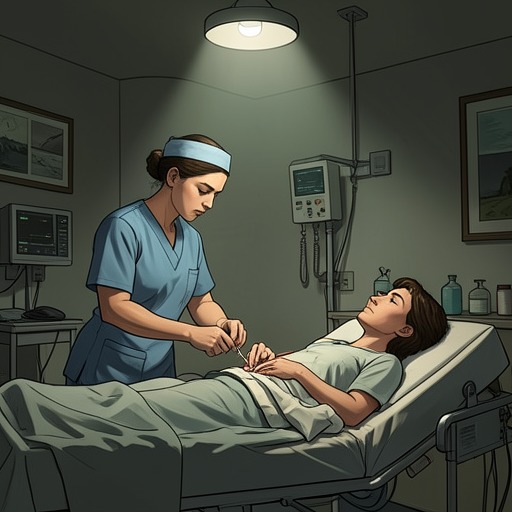
For Cullen, the appointment carried prestige. U.S. News and World Report had ranked Saint Luke’s among the country’s Top 100 medical facilities, and its nine-room Coronary Care Unit was presented as one of the institution’s prized wards. The unit’s emphasis on private rooms and one-on-one care had an unintended consequence: nurses could perform routine tasks out of view. In one instance, Cullen injected digoxin into an elderly patient’s intravenous line through a piggyback port, a route ordinarily used to flush the line with saline. Because the action could resemble legitimate nursing work, and because no one entered the private room, the ordinary procedure offered cover for a lethal act.
Saint Luke’s was also a workplace shaped by its internal hierarchies. In April 2000, while assigned to the Burn Unit, Cullen sent an email expressing solidarity with two nurses who had recently been fired and announcing that he was seeking a transfer to the Cardiac Floor. He described himself as aligned against the ward’s long-serving nurses, whom he called the Senior Service, and used Nazi comparisons. The message went to the entire Burn Unit staff, including those he had criticized. The resulting hostility made life on the unit unbearable, and the Cardiac Unit no longer had room for his transfer. His eventual appointment at Saint Luke’s placed him in a different high-status clinical setting, but the book’s account makes clear that conflict and professional grievance had preceded it.
Warning Signs in the Coronary Care Unit
The nurses did not all recognize a change at once. Death was part of work in a coronary-care ward, and deaths sometimes appeared to cluster; still, experienced nurses sensed that something was different. Codes seemed nearly constant, and patients were not surviving them. That unease sat alongside a more concrete, protracted warning: Pronestyl, a drug stocked in unusually large quantities but rarely used, was disappearing from the medication room.
The pattern had begun as early as December 2001, when day-shift nurse Joe Chandler noticed that drugs were going missing. By spring, nurses were restocking Pronestyl every afternoon only to find it gone at night. For months, the unexplained loss became a running joke rather than the subject of an investigation. Thelma Moyer, the day charge nurse, noticed that the drug disappeared in spurts. In April 2002, she brought the problem to her supervisor, Ellen Amedeo, and a hospital pharmacist. The pharmacist could not account for the missing stock, but the concern did not prompt further action at that point.
The absence of Pronestyl was not the only sign of diversion. A thirty-one-year-old day nurse, Kim Wolfe, went to the medication storage room to draw intravenous medications and placed a used needle into the sharps box. It did not make its usual sound at the bottom; the container was so full that the needle would not fit. When staff examined what had accumulated, they found an assortment of medications, including six bottles of Vecuronium bromide, a paralyzing agent, and forty boxes of Pronestyl. The collection also included drugs such as magnesium sulfate, phenylephrine, Levophed, dobutamine, nitroglycerine, and labetalol. To nurses, the cache represented both dangerous substances and evidence of medication control failing inside the unit.
Gerry Kimble, Candy Wahlmark, and Wolfe began watching the storage-room entrance while continuing to care for patients. They saw people enter to restock medications, sometimes leaving the door wedged open, but could not explain what they had found. Wolfe and Wahlmark later saw Cullen leave the room. Wolfe checked the sharps box and found it full again. They alerted Amedeo, telling her they believed they knew who had been using the vecuronium. On Monday morning, June 3, Kimble and a supervisor, watched by hospital security, emptied the container while wearing sterile gloves. Among the dozens of bottles were ten spent vials of Vecuronium bromide. The drug had already been used on Edward O’Toole seven hours earlier, though the nurses did not yet know that.
Investigation, Removal, and Limited Warnings
The discovery of missing heart drugs and large amounts of a paralyzing agent brought Saint Luke’s risk management director into discussions with the hospital’s legal counsel. The risk manager and director considered what would be best for the hospital, knowing Cullen was scheduled to return to work within hours. The hospital consulted its in-house attorney, who brought in a law firm specializing in criminal law and malpractice defense. Paul Laughlin, a former Philadelphia assistant district attorney, was assigned to the matter.
When another cache of drugs was found after Cullen returned for a shift, Laughlin came back to the hospital and waited in an empty room near the unit. Nurse Brad Hahn brought Cullen to him. Cullen had not expected the confrontation and told Hahn, “You know, you could have given me a heads-up.” The episode moved from a concealed medication problem to a direct encounter with the nurse suspected of involvement, but it did not produce an investigation that identified the patients he had harmed.
Cullen was offered a choice that the account describes as scarcely a choice: he could resign, receive neutral references, and avoid having the incident appear on his records. He accepted the arrangement. Security escorted him through the unit and left him in the parking garage. Saint Luke’s later maintained that Laughlin’s inquiry, chart reviews by risk management and nursing supervisors, and additional work by general counsel had found no suspicious deaths connected to the vecuronium or other suspicious actions by Cullen. In a separate account of the hospital’s handling, an internal review failed to find evidence of foul play, and an outside review after the matter reached law enforcement also did not lead the hospital to conclude that Cullen had harmed patients.
The hospital nevertheless regarded Cullen as someone it did not want working in its healthcare system. In August 2002, senior vice president Charles D. Saunders called colleagues at local hospitals to ask about unusual incidents involving Cullen and to say that he should not be rehired. Saint Luke’s executive vice president Vince Joseph and Laughlin also contacted colleagues. Saunders specifically told Lehigh Valley Hospital about the medication diversion and Cullen’s do-not-rehire status. These calls did not amount to a public warning: the officials were not informing the public, police, or the State Nursing Board, and Somerset Medical Center was not among the institutions contacted. That omission matters because Cullen went on to work at Somerset, where patients were poisoned.
Accountability and the Record of Harm
The timing and scope of Saint Luke’s notification changed after nurses raised concerns and the district attorney became involved. In a later letter dated September 6, the hospital’s president and chief executive officer informed the State Nursing Board about the sharps-box incident, the numerous empty vials of dangerous drugs, and Cullen’s departure from the hospital. The letter came roughly two months after his removal. The contrast between this eventual notification and the earlier closed investigation shows that the institutional response was not a single decision: it shifted as outside scrutiny and staff testimony put pressure on the hospital to account for what had happened.
Nurse Pat Medellin had met with Laughlin on the night he confronted Cullen and was invited to contact him if she had further thoughts. After learning that open vecuronium containers had been found and that nurses feared patients might have been harmed, she called him around June 7. She explained that unauthorized administration of the drug could fit unexplained slowing of patients’ heart rates followed by cardiac arrests, and that no patient in the unit should have been receiving it. Laughlin told her the investigation was closed and that he was confident Cullen was not harming patients. Medellin challenged that certainty, pointing to investigative gaps: he had not compared medications delivered by the pharmacy with medications actually used, or compared the number of patient codes on day and night shifts when Cullen was working. Laughlin nevertheless reiterated that the inquiry was closed and not open for further review.
Later legal proceedings examined both what Saint Luke’s knew and what it had told other institutions. Judge Bryan D. Garruto rejected the hospital’s claim that it was unaware of, and had no responsibility to convey, the danger posed by Cullen. The court noted that Saint Luke’s had chosen not to disclose his rehire status in response to an inquiry from Somerset while officials were calling other area hospitals to warn them not to hire him. The decision allowed claims involving the hospitals to proceed on that issue; it did not decide the merits of the families’ cases. Five families sued Saint Luke’s over former patients, and the hospital ultimately settled with them out of court. Settlement details were sealed.
Court records also describe how narrow the early reviews were. A forensic pathologist reviewed seventeen patient charts selected by Saint Luke’s but was not given a written list of the diverted medications and apparently did not speak with nurses or review their suspicions about Cullen. He could not conclude that Cullen had harmed anyone. The limits of that review stand in contrast to what became known later: Cullen confessed to killing, among others, the five people whose deaths were at issue in those cases, and seven patients have been specifically identified as killed by him at Saint Luke’s.
Narrative Significance
Saint Luke’s is more than the place where Cullen worked and patients died. Its private rooms and routine medication procedures made suspicious actions difficult to distinguish from ordinary care; its storage practices allowed missing drugs to become a joke before they became an inquiry; and its internal investigation failed to connect diverted medication with suspicious deaths. When the hospital did act against Cullen, it protected itself from rehiring him and privately warned selected hospitals, while leaving police, regulators, the public, and Somerset outside the initial circle of warning.
The hospital’s history therefore exposes a tension between recognizing danger and accepting responsibility for it. Nurses noticed unexplained deaths, missing Pronestyl, and a sharps box filled with spent vials. Some tried to press the implications; the response from the lawyer leading the inquiry was that the case was closed. The eventual legal scrutiny centered not only on whether Saint Luke’s had made a false statement, but on the consequences of selectively communicating the risk. Within the larger story, the hospital’s most consequential failure was not simply that it could not initially prove what Cullen had done. It was that evidence of danger and knowledge of his employment status did not travel consistently to the people and institutions who might have acted on them.